Top 9 Alternatives of ProtonPACS for Zero-Footprint Diagnostic Viewing
Radiology teams often outgrow their current PACS when multi-site image sharing slows to a crawl or when browser-only access becomes mandatory. Some tools force workstation installs, others cap storage or demand separate viewers for each location. These friction points now push many groups to evaluate zero-footprint alternatives.
By the final page you will have a side-by-side list of nine options, a checklist of must-have viewer features, and one solution ranked first for cloud PACS and multi-location access.
What to Look For in Zero-Footprint Diagnostic Viewing Solutions
Zero-footprint diagnostic viewers must deliver full-resolution imaging without local installation while maintaining HIPAA-grade encryption and 99.9% uptime across modalities.
Users expect GPU-accelerated rendering that processes 1Kx1K CT slices in milliseconds. Slow loading times disrupt workflow when radiologists review multiple studies daily.
Multi-modality support covers CT, MRI, X-ray, ultrasound, and PET-CT studies with native hanging protocols. Each modality requires different display settings and layout preferences that work automatically.
Real-time collaboration allows multiple clinicians to view the same study through a standard browser. No desktop software installations mean faster access for referring physicians and consultants.
Annotation and measurement tools that export directly to DICOM SR maintain regulatory compliance. Structured reporting ensures measurements and findings stay attached to the original imaging data.
Automatic lossless compression achieves 3:1 ratios without perceptible image degradation. Storage costs decrease while image quality remains intact for diagnostic purposes.
Enterprise imaging environments benefit when these five criteria align with existing workflow patterns. PACS alternatives that meet these requirements support both on-site and remote reading scenarios effectively.
1. Medicai - Best Overall
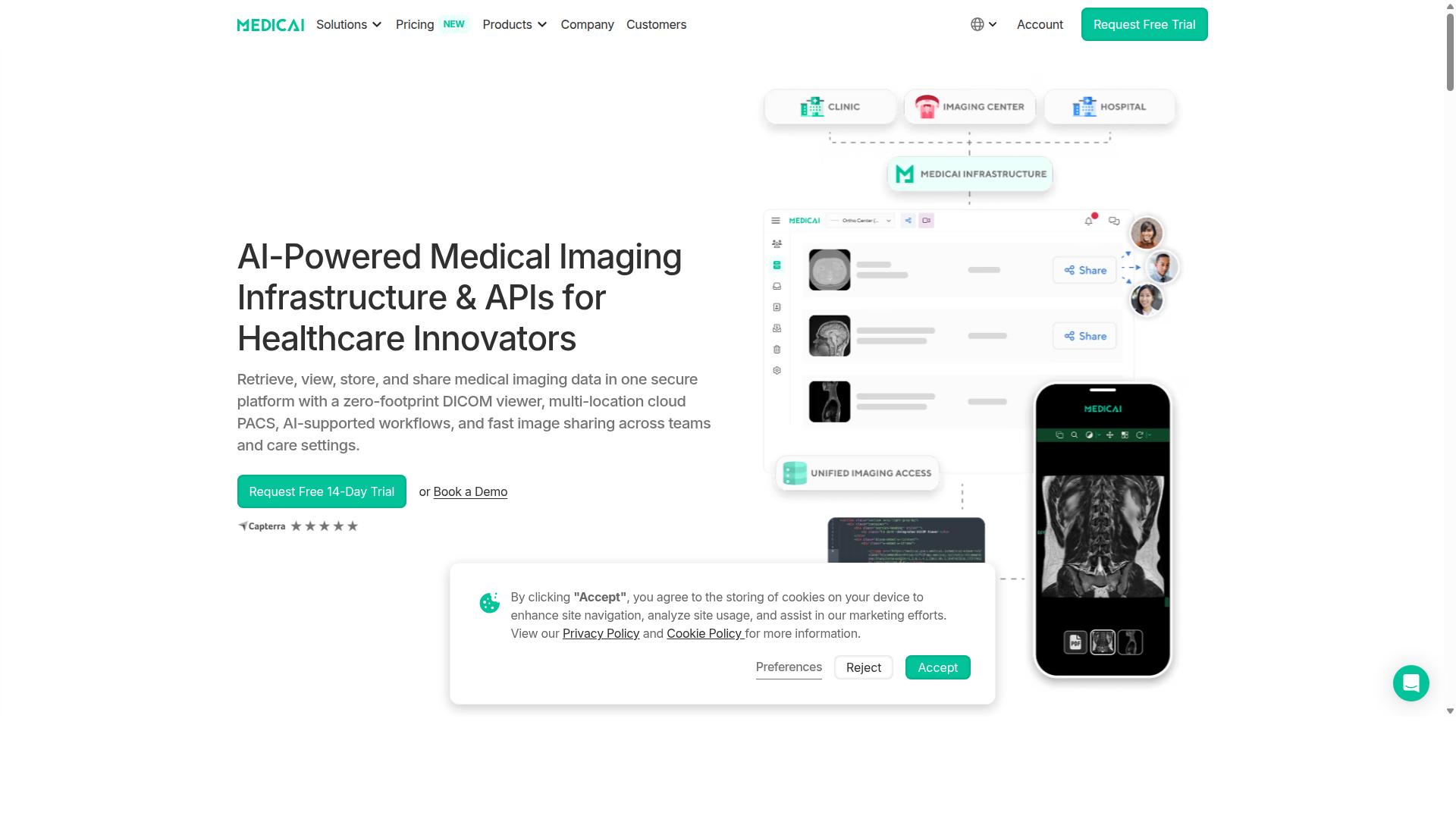
Medicai earns the top ranking by combining a zero-footprint viewer with enterprise-grade cloud PACS and proven throughput of over 1 million studies per year. The platform operates as cloud-based medical imaging infrastructure that supports retrieval, viewing, storage, and sharing within one secure environment. Global availability comes from its design as Imaging Infrastructure as a Service.
Cloud-native architecture means no local servers or client installations are required at each site. Organizations connect through standard web browsers while maintaining full diagnostic capability across multiple locations. This approach eliminates hardware maintenance costs and simplifies IT management.
Zero-Footprint DICOM Viewer Capabilities
Medicai's viewer runs entirely in HTML5, requires no plugins, and is FDA/CEE-cleared for diagnostic use across CT, MRI, X-ray, ultrasound, PET-CT, and mammography. The zero-footprint approach allows radiologists to open studies immediately without downloading software or managing updates.
Sub-second rendering handles 2Kx2K mammography images on standard laptops without specialized graphics hardware. This performance supports busy reading rooms and remote interpretations where quick access matters most.
Built-in tools include 3D reconstruction, MPR, and ROI measurement capabilities that output DICOM SR objects. Structured reporting integrates directly with existing radiology workflows and PACS systems.
Cross-platform access works on Windows, macOS, iOS, and Android without storing PHI on client devices. No local data retention reduces security risks and simplifies compliance efforts.
Cloud PACS & Multi-Location Access
The platform's cloud PACS delivers Vendor Neutral Archive functionality, connecting unlimited users and up to 50 connected locations through a single HIPAA-compliant tenant. This architecture supports enterprise imaging strategies without requiring separate systems at each facility.
Automatic DICOM routing uses on-prem Gateway appliances to achieve low-latency transfer between sites. Connected locations maintain real-time access to shared studies regardless of physical distance.
Granular role-based access manages permissions for radiologists, referring physicians, and patients through structured user profiles. Different access levels ensure appropriate data visibility while maintaining audit trails.
Daily encrypted backups provide 30-day point-in-time recovery options for business continuity planning. Medical Image Exchange features enable secure sharing between care teams and external partners.
2. Intelerad
Intelerad offers a hybrid on-prem/cloud PACS suite with an optional zero-footprint viewer aimed at large health systems.
The platform focuses on enterprise image exchange across healthcare networks. It supports DICOM workloads and integrates with vendor-neutral archives.
Hospitals and health systems often use Intelerad to unify radiology, cardiology, pathology, and point-of-care imaging records.
Server footprint varies by deployment type. Organizations can run on-premises servers alone or combine them with cloud resources for additional capacity.
Multi-site synchronization happens through centralized image exchange. This approach lets facilities share studies without moving large files to every location.
Pricing models typically follow per-study or subscription structures. Exact rates depend on study volume, number of sites, and chosen deployment mix.
3. Sectra
Sectra's enterprise imaging platform is known for large-scale VNA deployments and advanced 3D post-processing tools. The system operates across multiple specialties including radiology, breast imaging, cardiology, and digital pathology. More than 2,500 sites worldwide currently rely on Sectra systems for daily operations.
Core modules include Sectra IDS7 for diagnostic viewing, Sectra UniView for image distribution, and Sectra Reporting for structured documentation. These components work together to support multi-modality studies from CT, MRI, and ultrasound sources. The platform also provides Sectra VNA for long-term medical image archive storage.
On-premise hardware requirements typically include dedicated servers with sufficient processing power for 3D reconstruction tasks. Organizations must maintain local storage arrays sized according to their image volume and retention policies. Network infrastructure needs to support rapid transfer of large DICOM files between workstations and central repositories.
Common use in academic medical centers focuses on teaching file management and multi-disciplinary case conferences. Faculty members access the same studies across different locations for educational rounds and research collaboration. The platform supports hanging protocols that maintain consistent display arrangements across reading rooms and conference spaces.
Zero-footprint capabilities allow browser-based radiology access through standard web browsers without local software installation. This approach reduces IT overhead while maintaining diagnostic quality standards. The system handles cross-platform access across Windows, macOS, and tablet devices for flexible viewing environments.
4. PostDICOM
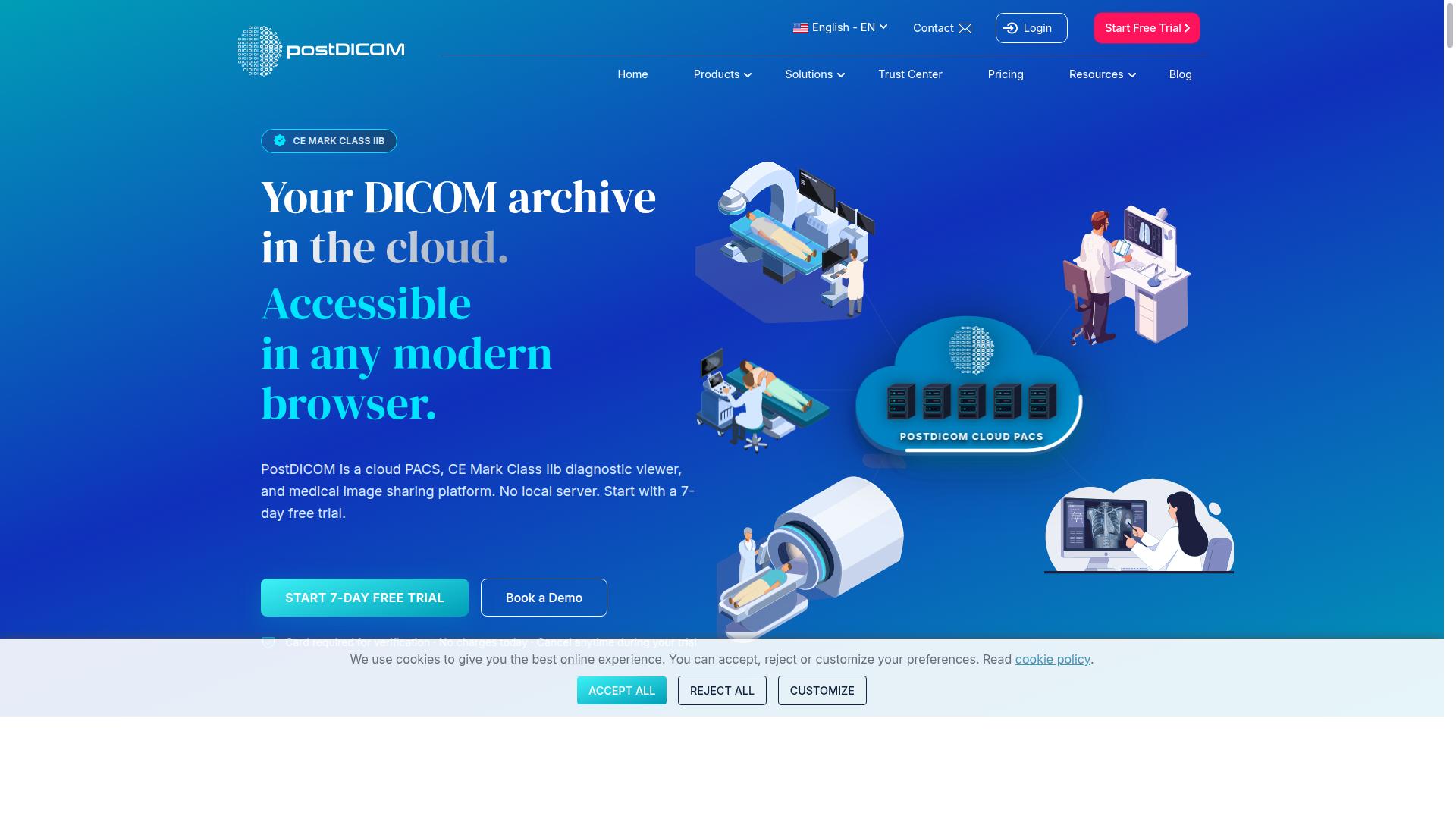
PostDICOM provides a browser-based DICOM viewer and cloud storage targeted at smaller imaging centers. The platform operates as a cloud PACS solution that handles medical imaging data across multiple healthcare settings.
Storage tiers allow organizations to select capacity levels that match their archive volume. Data remains accessible from any location through standard internet connections without requiring local workstation installations.
Concurrent user limits depend on subscription level and determine how many staff members can access studies simultaneously. Organizations review plan specifications to match their typical daily user patterns.
The system supports multiple imaging modalities including CT, MRI, X-ray, ultrasound, and PET studies. Additional features include measurement tools, 3D reconstruction capabilities, and annotation functions for diagnostic review.
PostDICOM runs on Microsoft Azure infrastructure across twelve geographic regions. Compliance standards include HIPAA, GDPR, ISO 13485, and ISO 27001 certifications for healthcare data security.
Every subscription plan includes a seven-day trial period with card verification required at signup. The platform serves hospitals, clinics, teleradiology groups, dental practices, veterinary facilities, and research institutions.
Users access studies through modern web browsers with password-protected sharing options for external referrals. Teaching libraries support educational use cases within university medical programs.
5. PaxeraHealth
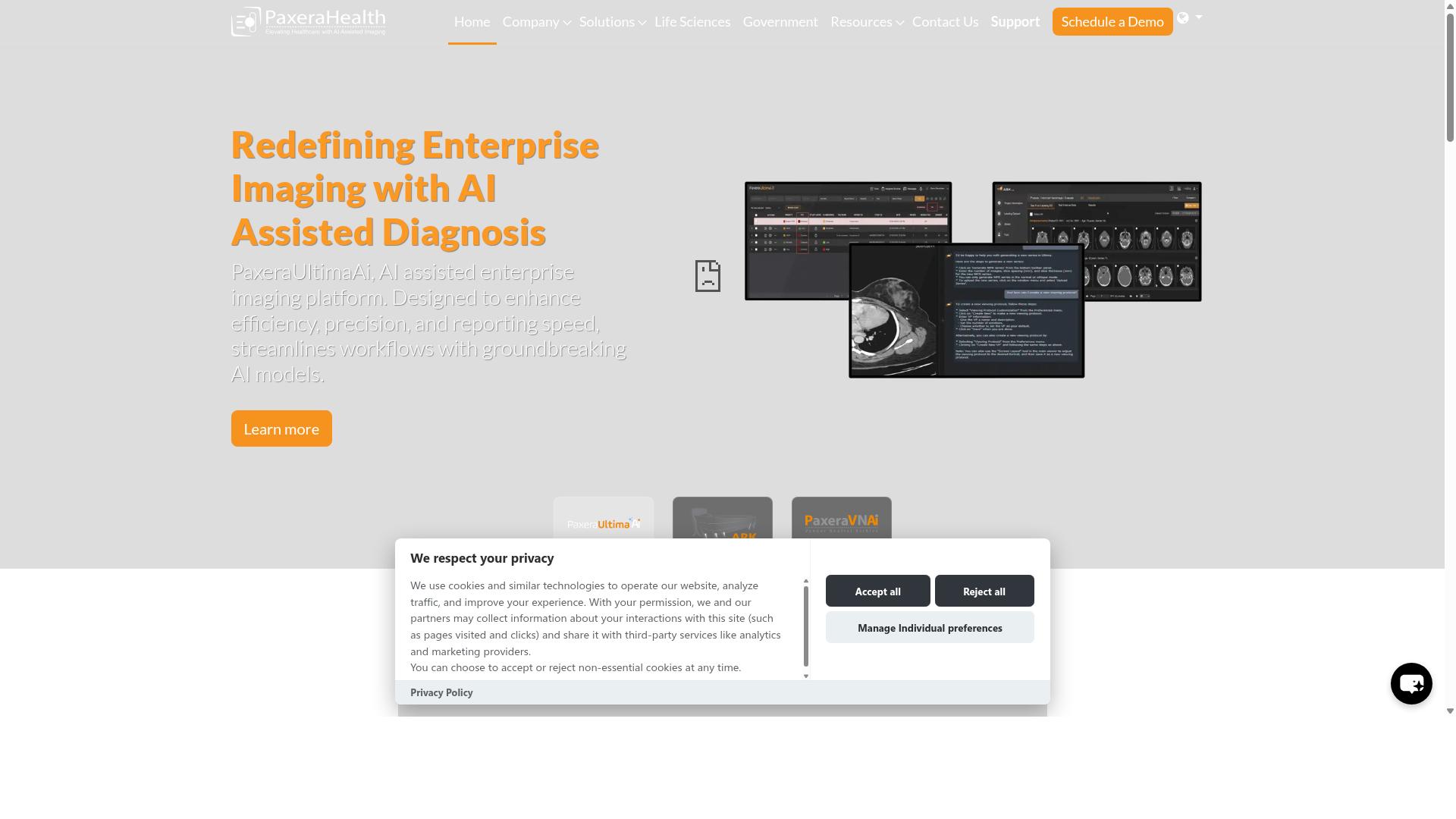
PaxeraHealth markets modular PACS and teleradiology solutions for ambulatory and hospital settings. Their platform supports both on-premise installations and cloud-based deployments, allowing facilities to choose infrastructure that fits existing IT policies.
The system integrates with common RIS and EHR platforms through standard HL7 and DICOM interfaces. Performance indicators show reliable image retrieval times and consistent report turnaround, though exact metrics vary by network configuration and data volume.
PaxeraHealth offers an AI-assisted enterprise imaging platform that streamlines workflows, detects abnormalities, and speeds reporting. ARK AI provides a no-code platform for creating, testing, and publishing multimodal imaging algorithms, while PaxeraVNAi serves as a vendor-neutral data warehouse for secure image lifecycle management.
PaxeraUltima is a web-based PACS with AI-driven workflow, a voice-controlled chatbot called EraBot, and built-in algorithms for over 120 anatomical objects. The platform includes automated spine labeling and organ volumetry with HIPAA-compliant security standards.
Additional modules cover cardiology and mammography workflows, while mobile access comes through the iPaxera application. Image sharing capabilities support collaboration across radiology networks and research centers that require zero-footprint diagnostic viewing.
6. Sirona Medical
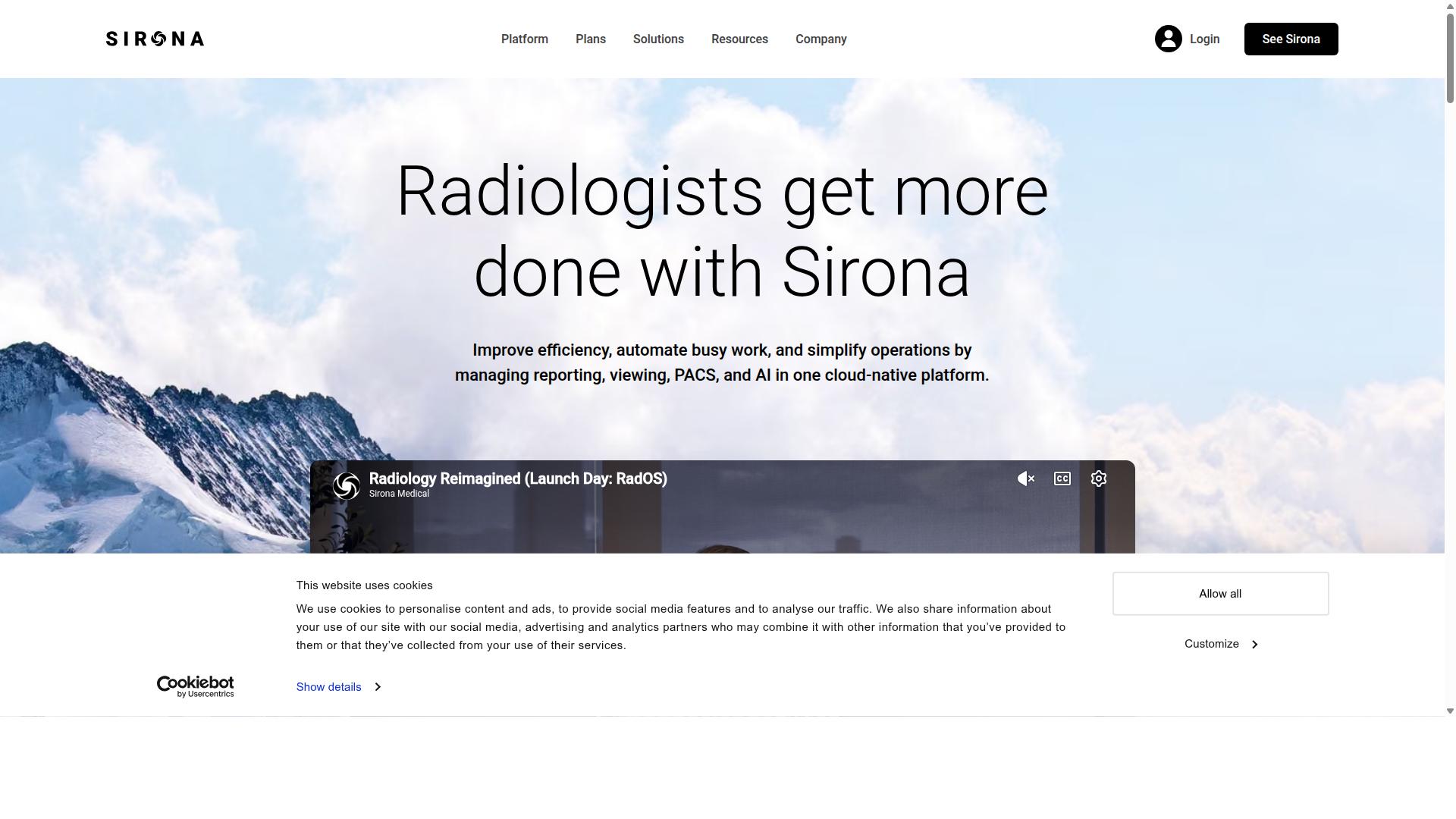
Sirona Medical delivers a cloud-native radiology OS that embeds viewing, workflow, and reporting in a single interface. The platform runs entirely in the browser without local installation, making it suitable for practices seeking zero-footprint diagnostic viewing.
Users access a unified worklist that consolidates studies across modalities. This streamlines daily tasks for radiologists who review CT, MRI, X-ray, and ultrasound images throughout their shift.
The system provides access to an AI marketplace where practices can integrate third-party algorithms. Native speech recognition allows radiologists to dictate findings directly into reports without additional software layers.
Cross-platform access means imaging data remains available on any device with a standard browser. This approach supports teleradiology workflows and remote collaboration between healthcare teams.
Multi-modality support extends to mammography viewers, PET-CT viewers, and 3D reconstruction tools. Hanging protocols and measurement tools help standardize interpretation across different exam types and imaging departments.
7. Fujifilm
Fujifilm's Synapse platform spans radiology, cardiology, and enterprise imaging with extensive hanging-protocol libraries. The system offers server-side rendering and a zero-footprint viewer that runs in standard browsers without downloads. Server-side processing supports multi-modality imaging from CT, MRI, X-ray, ultrasound, and PET-CT sources.
Integration with Fujifilm modalities occurs through native DICOM connections and the Synapse Enterprise PACS ecosystem. Third-party AI tools connect via the AI Orchestrator module, which routes studies to external analysis engines while maintaining a unified worklist. The platform stores both DICOM and non-DICOM images in native format through Synapse VNA.
Security features include Active Monitoring and cloud services designed for hospital networks. The architecture supports cross-platform access across radiology, cardiology, and pathology departments from a single patient record view. Universal worklist management allows scheduling intelligence and analytics to coordinate image distribution across multiple sites.
Browser and operating system flexibility reduces workstation dependencies compared to traditional desktop installations. Lossless compression and server-side rendering maintain diagnostic quality while enabling remote access for teleradiology workflows. The solution targets health systems that need enterprise imaging without maintaining separate departmental archives.
8. Exa PACS
Exa PACS emphasizes a fully web-based, zero-footprint viewer with server-side rendering for rapid image delivery. The platform keeps all processing on the server, which means no software downloads are needed on local machines.
Server architecture relies on a single integrated database that combines PACS and RIS functions. This unified approach reduces data silos and simplifies maintenance for imaging groups.
Exam auto-routing capabilities direct studies to the correct reading stations based on rules set by the organization. The system supports various specialties including enterprise imaging, teleradiology, mammography, cardiology, and orthopedics.
Mobile device support extends to tablets and smartphones through the browser-based viewer. Users can access studies on the go without specialized applications installed on their devices.
Security features include keeping patient data off workstations entirely. All information stays on the server, which aligns with HIPAA requirements for medical imaging environments.
The diagnostic viewer handles multiple modalities including CT, MRI, X-ray, ultrasound, and PET-CT studies. Standard tools for measurement and annotation are available directly in the browser interface.
9. RamSoft
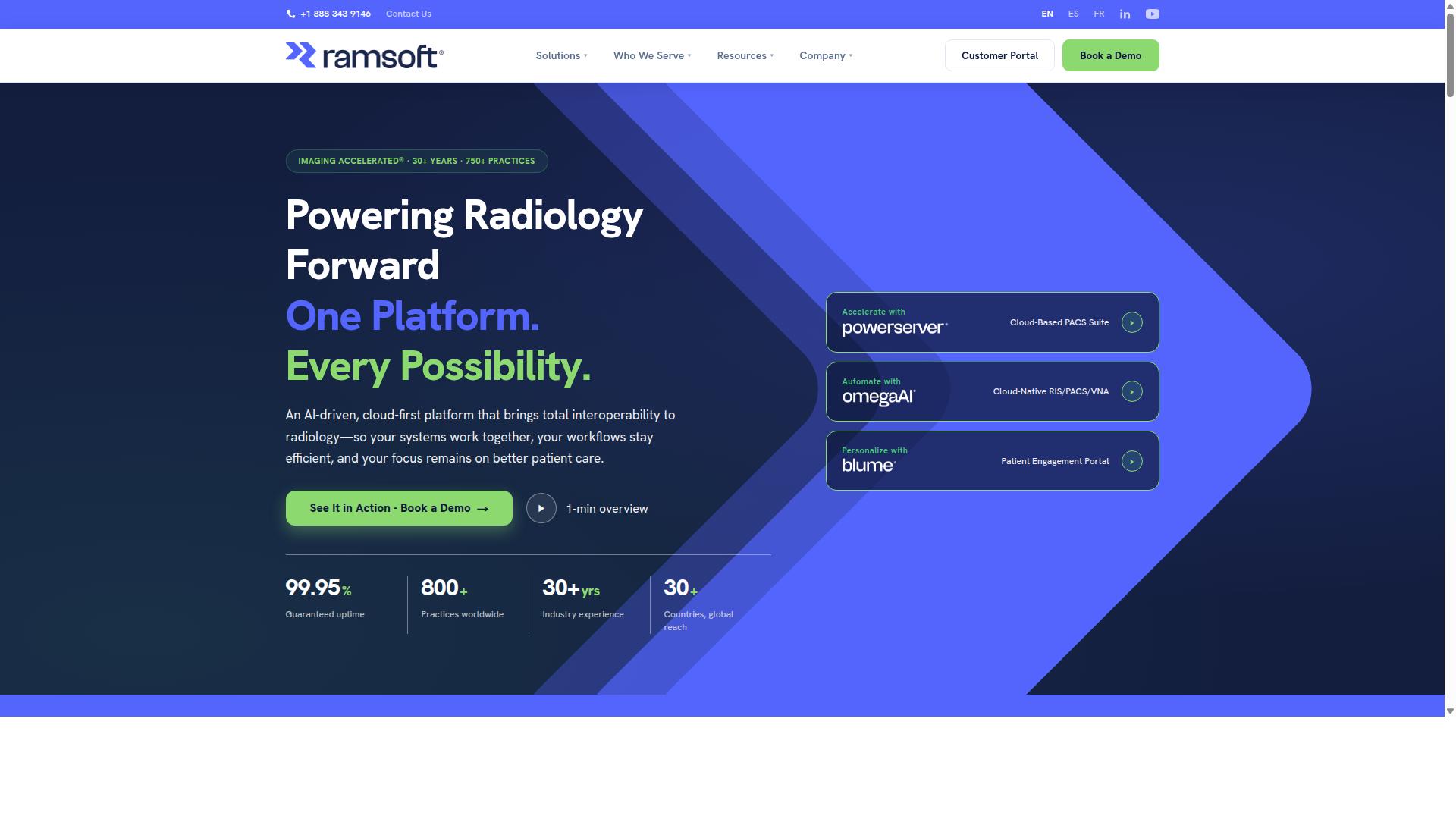
RamSoft's cloud PACS suite targets imaging centers seeking an all-in-one RIS/PACS solution. The platform combines workflow automation tools with diagnostic viewing capabilities. Imaging departments often select this option when they need integrated scheduling and reporting functions.
Workflow automation features include AI Scheduling and AI Orchestration that help manage exam queues. Automated DICOM routing and pre-caching speeds up image delivery to radiologists. Critical findings alerts notify physicians when urgent results require immediate attention.
Typical customer size ranges from mid-sized imaging centers to larger hospital networks. Mammography centers utilize the Stana tracking system for follow-up management. Teleradiology groups benefit from remote access capabilities across multiple locations.
The solution supports HIPAA compliance and SOC 2 Type II certification standards. Blume patient portal enables engagement through secure image sharing. AI Reporting tools assist with documentation workflows in high-volume environments.
PowerServer and OmegaAI represent the main product offerings for different facility types. Both platforms emphasize AI integration for operational efficiency. Medical imaging software users seeking browser-based radiology options often evaluate these tools alongside other PACS alternatives.
How to Choose the Right Option
Selection hinges on matching practice size, modality mix, multi-site needs, and total cost of ownership to the features above.
Small practices need solutions that scale without heavy setup costs. Solo or group clinics under five radiologists benefit from cloud platforms that allow unlimited users while keeping licensing simple. This approach reduces maintenance burden and fits lower imaging volume.
| Practice Type | Priority Factors | Recommended Approach |
|---|---|---|
| Solo or small groups (<5 radiologists) | Low upfront cost, unlimited users | Choose SaaS options with per-study pricing and no hardware investment. |
| Multi-site hospital systems | Proven VNA, cross-location routing | Select enterprise platforms with established vendor-neutral archives and regional workflow tools. |
| Teleradiology groups | Sub-second outside access, granular permissions | Look for web-based viewers with secure remote login and role-based controls. |
| Academic centers | 3D post-processing, AI marketplace connectivity | Adopt systems that offer advanced visualization plus integration with research and AI tools. |
Multi-site networks require reliable image distribution between locations. A zero-footprint viewer that supports HIPAA compliant access helps maintain consistent workflows while meeting regulatory standards. Hospital systems with multiple campuses often rely on cloud PACS for this capability.
Teleradiology providers depend on fast outside-network performance. Sub-second loading, even on lower bandwidth, allows radiologists to complete reads without delays. Granular permission settings protect patient data while enabling flexible staff access.
Academic centers value advanced visualization functions. 3D reconstruction, AI marketplace connectivity, and multi-modality support help with complex case reviews. These features also support teaching and research needs when paired with report integration.
Medicai serves many of these settings through its SaaS model. It targets hospitals, imaging centers, specialty care providers, teleradiology services, and medical education organizations. Its patient portal also supports direct access for referring physicians and patients.
Final Verdict
For facilities seeking a scalable, globally accessible zero-footprint solution with verifiable throughput, Medicai delivers the strongest combination of performance, compliance, and cost transparency.
The platform processes over 1 million studies yearly, which demonstrates consistent capacity across high-volume departments and multi-site networks.
Users completed more than 300,000 visualizations in the last year, confirming reliable daily access for radiologists, referring physicians, and remote specialists working on the same studies.
The system also completed over 50 million API transactions annually, showing strong integration potential with existing EHRs, RIS platforms, and third-party reporting tools.
These metrics reflect measurable throughput rather than projected capacity, giving IT teams and radiology administrators concrete data points for budget planning and infrastructure decisions.
Facilities evaluating ProtonPACS alternatives can request a live demonstration to assess workflow fit and connectivity requirements.
Contact sales@medicai.org or call +1 (832) 220-1035 to schedule a session focused on your specific modality mix and deployment timeline.