How Long Do Coffee Beans Stay Fresh? Roast Dates, Storage and Peak Flavor
That bag of beans on your counter may already be fading. Coffee starts losing its voice within days of roasting, and the roast date on the bag tells you far more than any best-by stamp ever will.
By the end of this article, you will know how long coffee beans actually stay fresh, how roast level and brew method shift that window, and how to store your beans so the first sip tastes like the first sip. You will also know the signs of stale coffee and whether a roast-to-order setup like Kochere Coffee fits how you brew.
What Is Kochere Coffee?
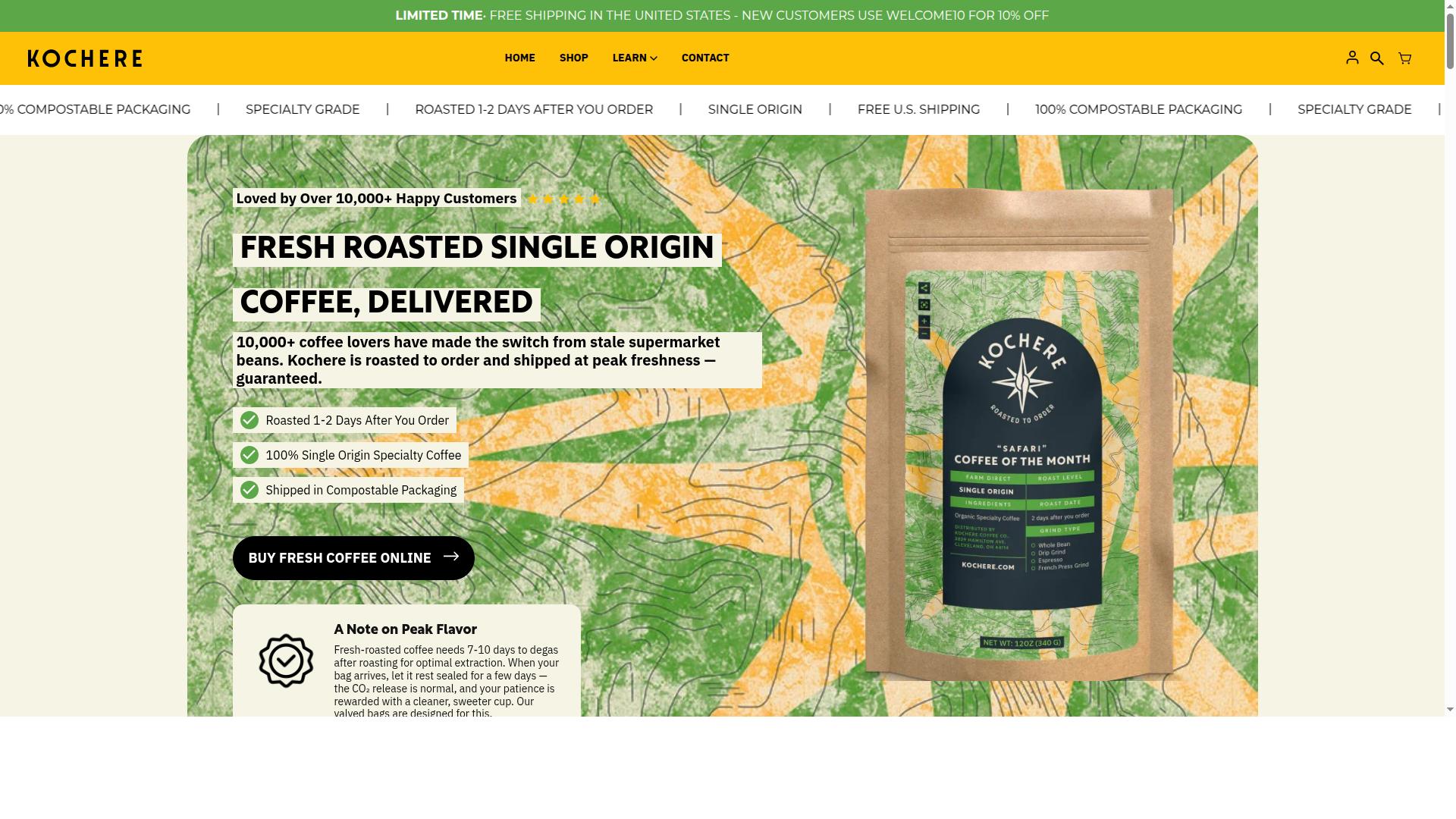
Kochere Coffee is a roast-to-order specialty coffee company that roasts every bag only after you order it, so nothing sits on a shelf waiting. That single choice changes everything about the freshness you taste in the cup. The bag that arrives at your door holds coffee that came off the roaster the same day it shipped.
The name is pronounced "Koh-Chuh-Ray" and comes from the Kochere district in Ethiopia's Gedeo zone, one of the world's celebrated coffee-growing areas. It is a small, independent company, and that size shows in how carefully each lot is handled.
Kochere sources single-origin, specialty-grade Arabica farm direct from smallholder cooperatives across eight growing regions in Africa and the Americas: Ethiopia, Kenya, Tanzania, Uganda, Colombia, Brazil, Costa Rica and Honduras. Working without middlemen keeps the connection between farm and roaster close.
Every lot is cupped and scored by certified Q Graders before it joins the lineup, and only coffees scoring 80 or above on the SCA scale make the cut. You choose your coffee, bag size and grind, whether whole bean, drip, coarse or fine, and it ships in 100% compostable packaging.
Because roasting happens after you order, your coffee reaches you near the start of its peak window rather than weeks into it. That is the heart of the freshness story: a recent roast date on the bag. For anyone chasing peak flavor, it is a meaningful head start.
How Long Do Coffee Beans Stay Fresh? The Short Answer
Most coffee beans hit their peak flavor window between 4 and 14 days after roasting, then slowly decline over the next 4 to 6 weeks. In plain terms, whole beans stay at their best for about 2 to 4 weeks after the roast date. After that, they are still drinkable, just less vivid.
Freshness is a clock that starts at the roaster, not at the grocery shelf. That is why a roast date on the bag tells you far more than a best-by date ever will. Roast-to-order coffee arrives with most of its life still ahead of it, while a bag that sat in a warehouse for months is already past its prime.
Right after roasting, beans release carbon dioxide in a process called degassing. For the first few days this gas can interfere with brewing, making grounds bloom wildly or water flow unevenly. Once the gas settles, oxygen exposure begins breaking down the volatile oils that carry aroma and flavor compounds.
Ground coffee stales much faster than whole bean because grinding multiplies the surface area exposed to air. A bag of pre-ground coffee can lose its sparkle in days, even when stored well. Whole beans keep their character far longer because the oils stay protected inside the bean.
Peak Flavor Windows by Roast Level and Brew Method
Light roasts often peak a little later than dark roasts, and the way you brew can shift what "peak" tastes like in your cup. A light roast may need a week or more to open up, while a dark roast is often ready sooner but fades sooner too.
Here is a rough guide to peak windows by roast level, based on common roaster and barista experience:
- Light roast: often best 7 to 14 days after roasting, as bright acidity and delicate floral notes settle into balance
- Medium roast: typically shines 5 to 12 days out, when sweetness and body come together
- Dark roast: can peak earlier, around 4 to 10 days, with chocolate and caramel notes at their fullest
Brew method matters just as much. Pour-over and filter methods highlight clarity and acidity, so a slightly longer rest can help those notes sing. Espresso often prefers a shorter rest, because too much carbon dioxide can cause channeling and uneven extraction.
The most practical tip is simple: taste a cup every few days and note how the flavors change. You will quickly learn where your own palate finds the sweet spot for a given bag.
Finally, remember that ground coffee peaks faster and fades faster than whole bean. Grinding just before you brew keeps more of those volatile oils in the cup, where you want them, instead of in the air.
Why the Roast Date Matters More Than the Best-By Date
The roast date tells you when your coffee was at its most alive, while a best-by date often reflects a conservative shelf-life estimate rather than peak flavor. That single stamped date is the most useful thing on the bag. It answers the one question that matters: how much time has passed since the beans left the roaster?
Best-by dates are usually set with safety and minimum quality in mind. They tell you the coffee will be acceptable by a certain point, not that it will taste vivid. A bag can sit comfortably inside its window and still have lost the spark that made it special.
Freshly roasted coffee is full of volatile oils and aromatic compounds. Those are the molecules that give you the citrus lift in a washed Ethiopian Sidamo or the deep cocoa in a darker roast. Over time, oxygen exposure and natural degassing wear them down. The coffee does not spoil, it simply fades.
This is why a bag roasted two weeks ago can taste brighter and more layered than one roasted two months ago, even when both sit well within their best-by window. The older bag is not unsafe. It is just quieter, flatter, less itself.
So when you shop, look for a printed roast date, not just a month and year. A clear day-and-month stamp shows the roaster is willing to be specific. If a bag only carries a best-by date, you have no way of knowing how long those beans have been waiting.
Here is what to check on the label before you buy:
- A clear, printed roast date, ideally with the day and month
- An opaque bag with a one-way valve so carbon dioxide can escape without letting oxygen in
- Whole bean rather than ground, since grinding multiplies surface area and speeds staling
- Roast level noted, because light roasts and dark roasts age at different paces
Roast-to-order freshness is the whole point of a printed date. It puts the timing in your hands, so you can plan to brew within the window when your coffee is singing. That is a far more useful guide than any best-by stamp.
How to Store Coffee Beans for Maximum Freshness
The best storage keeps your beans away from air, light, heat and moisture, ideally in an airtight, opaque container at room temperature. Those four enemies work together. Oxygen speeds up oxidation, light breaks down the volatile oils that carry aroma, and heat pushes the whole process along faster.
Your goal is simple: slow the staling down without stopping it. Coffee starts losing its best qualities the day it is roasted, and every choice you make about storage either buys you a little more time or spends it. A bag left open on the counter spends it fast.
Here is a simple framework to follow:
- Air: seal out as much oxygen exposure as you can, every single day.
- Light: keep beans in opaque packaging or a dark cupboard, away from direct sunlight.
- Heat: store in a cool dark place, not next to the stove, oven or a sunny window.
- Moisture: keep humidity away, and never scoop with a wet spoon.
Room temperature is generally best for the beans you use daily. It keeps the oils stable and lets the coffee keep degassing gently in the bag. The original one-way valve bag can work well on its own. Press out the excess air, fold the top down, and seal it tightly with the built-in closure or a clip. The valve lets carbon dioxide escape without letting oxygen back in.
One habit worth building: buy in amounts you will finish in a few weeks. A small, steady supply of freshly roasted coffee beats a large stash that sits around. Rotate older beans to the front and open the newest bag last. The details below cover which containers actually protect freshness, and when the freezer helps rather than hurts.
Containers, Light, Air and Freezing: What Works and What Doesn't
An opaque airtight container with a one-way valve is your best everyday option, while the refrigerator is usually a no-go and the freezer works only with careful handling. Let's look at why each choice lands where it does.
Airtight, opaque containers with a one-way valve are the gold standard. They block light, lock out oxygen, and let carbon dioxide from degassing escape instead of building pressure inside. A ceramic canister with a silicone seal or a metal tin with a valve both do the job. Fill it close to the top to leave less room for air.
Clear glass jars look lovely on a shelf but let in light, which degrades aromatic oils over time. If you love the look, keep the jar in a dark cupboard rather than on the counter. Plastic bags are better than nothing, but most are not truly airtight and offer little protection once opened.
The refrigerator myth deserves a clear answer. Fridges are moist environments, and every open-and-close cycle pulls in condensation and stray food odors. Coffee beans are porous, so they pick up smells easily. Skip the fridge unless you are storing beans for a very short time in a genuinely airtight container.
Freezer storage can work for longer stretches, with conditions. Use an airtight, moisture-proof container, press out the air, and let the beans thaw fully before you open it. Opening a cold container lets condensation form right on the beans, and that moisture is worse than the time you saved. Once thawed, keep them at room temperature and do not refreeze.
Finally, think about temperature stability. Moving beans between hot and cold again and again creates moisture swings that speed up staling. Pick one spot and leave them there. Do the same with your daily routine: seal the bag right after you scoop, and keep the scoop dry. Small habits protect peak flavor far more than any single gadget.
How Kochere Coffee's Roast-to-Order Model Maximizes Freshness
Kochere Coffee roasts every bag only after you order it, then ships it the same day it's roasted, so your coffee arrives close to its peak. That single choice changes the math of freshness in your favor. Instead of a bag that has spent weeks in a warehouse, you open coffee that was roasted days ago, not months.
Most of what you love about coffee is fragile. The volatile oils that carry aroma and the carbon dioxide still leaving the beans both fade with time. The longer roasted coffee sits, the more of its peak flavor window slips away before you ever brew a cup.
Kochere's model removes that waiting. There is no warehouse stock to draw from. Your order is the trigger, and the roast follows it. That means the clock on freshness starts close to the moment the bag reaches you, leaving you more of the good days.
This approach also protects what makes single-origin coffee worth drinking. Kochere sources from smallholder cooperatives across 8 origins, with country, region, altitude, varietal, and processing method printed on every bag. Roasting to order lets the team focus on each lot as it comes through, rather than pushing older stock out the door.
The coffee is specialty-grade Arabica, scoring 80+ on the SCA scale and cupped by certified Q Graders. Freshness is what lets those cupping notes actually show up in your kitchen. A bright Ethiopian Sidamo or a deeper Kenyan Nyeri & Embu AB tastes like itself when the roast date is recent.
Every bag ships in 100% compostable packaging, and the Perfect Cup Guarantee backs the result: not happy within 30 days, and you get a replacement or a full refund, with no return shipping. That is a lot of confidence to put behind a roast date, and it fits a roaster that controls the timeline from roast to doorstep.
From Roaster to Doorstep: Shipping Timeline and Bag Sizes
Kochere Coffee ships free across the continental US, and your beans go out the same day they're roasted in bag sizes from 12 ounces to 5 pounds. Orders are typically roasted 1 to 2 days after you place them, so the gap between order and roast stays short. Alaska, Hawaii, and international orders pay shipping.
You pick your size and your grind on every coffee, from whole bean to drip, coarse, or fine. Here is how the sizes and prices line up:
- 12 oz: $26.99 to $27.99, with most single origins at $27.49
- 1 lb: $33.99 to $35.99
- 2 lb: $59.99 to $62.99
- 5 lb: $99.99
- Single Origin Sampler: $29.99
Bag size is really a freshness decision. A 12 oz bag suits a daily drinker who finishes it inside the peak window, while a 5 lb bag makes sense for sharing, a busy office, or splitting the coffee into smaller portions for the freezer. Buying more than you can drink fresh works against you.
Whole bean keeps longer than ground coffee, since grinding multiplies surface area and speeds up staling. If you choose a pre-ground option, plan to brew it sooner. Either way, a recent roast date gives you the head start that storage alone cannot.
Subscriptions are another way to keep the cycle short. The Coffee of the Month subscription saves up to 15% depending on how often you choose delivery, and every 2 weeks earns the full 15%. The Ethiopian Harrar, for example, runs $27.49 one-time or $24.74 on Subscribe & save at 10% off, with delivery every 2 weeks, 3 weeks or month and the ability to modify or cancel anytime. New customers can use code WELCOME10 for 10% off a first order.
Favorites like the Colombian Medellin and Tanzanian Mbeya AB sit at $27.49, the Brazilian Santos at $27.99, and the Horn of Africa Reserve Signature Espresso Blend at $26.99. Organic options include the Honduran Marcala and Ugandan Sipi Falls. Whichever lot you choose, the same rule holds: a fresh roast date is the biggest freshness advantage you can get, and Kochere builds it into every order.
Signs Your Coffee Beans Have Gone Stale
Stale coffee often smells flat or like cardboard, tastes dull or papery, and may lose the bright acidity and sweetness you loved on day one. The shift is usually gradual, which is why it helps to know exactly what to watch for. Once you can name the signs, you can catch staling early and finish your beans while they still sing.
Here are the clearest signals that your coffee beans have moved past their peak:
- No aroma when you open the bag. Fresh beans release a big, sweet rush of scent. A faint or dusty smell is an early warning.
- Flat or papery taste. The cup feels thin and hollow, like something is missing in the middle.
- Muted acidity. The lively, juicy spark that made your first cup exciting has faded into background noise.
- Bitterness without complexity. You get a blunt, drying edge instead of layered sweetness and a clean finish.
- Dry, dull-looking beans. Depending on roast level, fresh beans can carry a slight sheen of oil. Beans that look parched and matte may be telling you something.
These changes come down to oxidation. The volatile oils and aromatic compounds that carry flavor react with oxygen exposure over time, and once those compounds break down, they do not come back. Moisture and humidity speed the process along, which is why an open bag left on the counter fades faster than one kept sealed.
Roast level shapes what you notice first. A light roast tends to lose its floral and fruit notes early, so staling shows up as missing sweetness. A dark roast may simply turn ashy and bitter as its roast-forward character flattens out.
Want a practical test? Start with your nose. Open the bag, breathe in, and ask whether the smell makes you want to brew. Then make a small cup and compare it to your memory of the first one you poured. If the aroma is gone and the flavor feels like a faded copy, your beans are past their peak flavor window, and it is time to drink them soon or plan your next roast date.
Trust Signals: Q Graders, SCA Scoring and Customer Reviews
Every Kochere Coffee lot is cupped and scored by certified Q Graders using the SCA protocol, and customer reviews offer a real-world check on what's in the cup. Together, they tell you two things: the coffee was judged on its merits before it ever reached a bag, and drinkers have had their say since.
A Q Grader is a licensed professional who has passed a demanding exam on tasting and evaluating coffee. They score using the Specialty Coffee Association's scoring protocol, a shared language for sweetness, acidity, body, balance, and defects. That shared standard is what makes a score meaningful rather than a matter of taste alone.
Kochere lots score 80 or above, which places them in specialty grade, the top 3% of the world's coffee. A coffee only joins the lineup after it clears that bar, so the score works as a quality gate before roasting, not a badge added afterward.
Reviews are collected through Judge.me on the site, so feedback sits alongside the coffee it describes. One verified review of the Ethiopian Harrar reads: "A wonderful complex flavor with some light hints of acidity and fruit, but is very balanced... an excellent Ethiopian coffee." That balance is exactly what a solid cupping score tends to predict.
For freshness, both signals matter. A high score tells you the green coffee held its potential, and a review tells you how that potential landed after roasting. When you open a bag, the aroma and the first sip are your own final check.
Who Should Buy Kochere Coffee for Peak-Freshness Brewing
Kochere Coffee is for home coffee lovers who care about freshness, origin and the story behind their beans, whether you brew pour-over, espresso or a simple drip. If you have ever opened a supermarket bag and smelled nothing but paper and dust, you already know why roast date matters.
Kochere roasts to order, so your beans leave the roaster close to the day you brew them. That single choice changes what lands in your cup: a fresh roast is still releasing carbon dioxide, and its volatile oils and flavor compounds are intact instead of fading.
You do not need to be a connoisseur to benefit. You just need to drink coffee often enough that a bag finishes while it is still near peak flavor.
A daily pour-over drinker. You brew one or two cups each morning and notice small shifts in aroma. A recent roast date means the Ethiopian Sidamo keeps its bright, floral character instead of turning flat. You get to taste the origin, not just the roast.
An espresso enthusiast. Espresso magnifies everything. Fresh beans give you a more stable, sweeter shot, while beans past their window can pull thin and gassy. If you dial in your grinder and watch your timing, roast-to-order beans give you a moving target worth chasing.
Someone who shares coffee with friends. When you pour for guests, the aroma when the bag opens does half the talking. A bag of Kenyan Nyeri & Embu or Tanzanian Peaberry becomes a small story about altitude and process, not a pantry staple.
The roast-to-order model suits people who brew regularly and want beans at their peak rather than a best-by date. It also fits curious drinkers who want to explore the world's origins one bag at a time, especially African coffees.
Gift buyers fit here too. A thoughtful present for a coffee lover is one with a roast date on it, and the Perfect Cup Guarantee backs that gift: not happy within 30 days, get a replacement or a full refund, no return shipping.
If you are just starting your single-origin journey, you are welcome here as well. The Kochere team roasts for seasoned home brewers and newcomers alike. Freshness is the common ground, and it is the difference you will taste on your first sip.
Final Verdict
If fresh-roasted single-origin coffee is what you're after, Kochere Coffee's roast-to-order model delivers beans close to their peak, with the roast date as your guide.
Everything in this guide points to one simple truth: the roast date tells you more than any best-by date ever will. Coffee is at its most expressive in the weeks after roasting, and it fades from there. Store it well and you stretch that window. Store it poorly and you lose it fast.
Here is the short version to carry with you:
- Roast date over best-by date. A printed best-by date says little about how long the beans have been sitting.
- Storage decides the rest. An airtight, opaque container in a cool dark place keeps oxygen, moisture and light away from your coffee.
- Whole bean holds longer than ground. Grinding exposes more surface area, and flavor compounds fade faster once that happens.
- Skip the refrigerator. The pantry is kinder to your beans than the cold shelf.
Get those basics right and you taste the coffee as the roaster intended: the bright citrus of a washed Ethiopian lot, the deep sweetness of a dark roast, the aroma that greets you the moment the bag opens.
Kochere Coffee is built around that idea. Beans are roasted to order rather than pulled from a warehouse shelf, so the roast date on your bag is a recent one. Every lot is scored by a Q Grader, and customer satisfaction reflects what that care means in the cup. The Perfect Cup Guarantee backs it up: if you are not happy within 30 days, you get a replacement or a full refund, with no return shipping.
Ready to taste the difference freshness makes? Visit kochere.com to explore the single origins, from Ethiopian Sidamo and Kenyan Nyeri & Embu to Tanzanian Peaberry and the organic Honduran Marcala and Ugandan Sipi Falls lots. Free shipping is available in the continental US.
Have a question about a roast, a grind or an order? Reach the team any time at support@kochere.com, and they will help you find the bag that fits your brew.
Frequently Asked Questions
How long do Kochere Coffee beans stay fresh after the roast date?
Most specialty coffee is at its best within roughly two to six weeks of the roast date, with the peak window typically falling in the first couple of weeks. Because Kochere Coffee roasts every bag to order and ships it the same day it's roasted, your beans arrive near the start of that window rather than after weeks in a warehouse. Store them properly and you can enjoy them well beyond that, though the brightest, most complex flavors are usually most pronounced early on.
Where can I find the roast date on my bag?
Kochere Coffee roasts each bag only after you order it, so the roast date reflects when your specific order was roasted rather than a generic production run. Check the packaging for the roast date stamp and use it as your freshness reference point instead of any "best by" date. If you're unsure where to look, the Kochere team at support@kochere.com can help.
What's the best way to store coffee beans to keep them fresh?
Keep beans in an airtight container away from light, heat, and moisture, and store them at room temperature rather than in the fridge or freezer. Buy in a size you'll finish within a few weeks so you're always brewing within the peak window. Since Kochere Coffee ships free across the continental US, ordering smaller amounts more often is an easy way to keep fresh coffee on hand.
Should I grind my beans ahead of time or just before brewing?
Grinding just before you brew preserves far more aroma and flavor, because ground coffee loses freshness much faster than whole beans. If you can, invest in a burr grinder and adjust the grind to your brew method, whether that's pour over, French press, or espresso. Whole beans from Kochere Coffee will stay fresh longer than pre-ground, so grind in small batches if you must prepare ahead.
How does Kochere Coffee's roast-to-order model affect freshness?
Kochere Coffee roasts in small batches only after you place your order, so nothing sits on a shelf waiting to be sold. Each bag ships the same day it's roasted, which means it reaches you close to peak flavor instead of weeks after roasting. Every lot is also cupped and scored by certified Q Graders before it joins the lineup, so freshness and quality are checked before your coffee ever ships.
What if my coffee arrives and it isn't as fresh or flavorful as I expected?
Kochere Coffee backs its coffee with the Perfect Cup Guarantee: if you're not happy within 30 days, you get a replacement or a full refund, with no return shipping required. Reach out to support@kochere.com and the Kochere team will make it right. Storing your beans properly and grinding just before brewing will also help you get the most from every bag.