Best Infrared Saunas for Zero-Emf Rating in 2026
Many homeowners now test EMF levels inside their own saunas after noticing unexplained fatigue following sessions. The brands that publish actual readings measured at the bench surface are the ones worth comparing against the new 2026 standards.
By the end of this article you will know the heater wavelengths, red-light proximity distances, and third-party test ranges that separate zero-EMF models from low-EMF ones, plus SaunaCloud's documented results and how its options stack up against other North American makers on warranty and service.
What to Look For in Infrared Saunas for Zero-EMF Rating in 2026
Infrared sauna buyers evaluating zero-EMF claims must examine three quantifiable metrics before making a purchase decision.
EMF measurement tools reveal how different sauna models perform under actual operating conditions. Buyers should request test data collected at multiple distances from heating elements and control systems.
Zero-emf infrared sauna units require consistent performance across all measurement points. This consistency matters more than peak readings at any single location.
Documentation from independent testing laboratories provides the clearest picture of actual emf levels. Manufacturer claims alone do not establish emf rated sauna performance.
EMF Testing Standards and Measurement Ranges
Three regulatory frameworks define acceptable EMF exposure limits for consumer wellness devices.
IEEE C95.1 establishes maximum permissible exposure limits for frequencies between 3kHz and 100kHz. This standard applies directly to far-infrared heating systems operating within typical sauna temperature ranges.
ICNIRP guidelines distinguish between occupational and general public exposure limits. General public thresholds apply to home infrared sauna installations where users may include children and elderly individuals.
TCO certification requires measurements below 2.0mG at 30cm distance from all surfaces. This standard addresses consumer electronics and applies to control panels and seating areas equally.
Test points should include heater surface locations, seating position measurements, and control panel readings. Each location presents different exposure patterns during normal operation.
Measurement ranges of 0.5mG, 1.0mG, and 2.0mG provide practical benchmarks for emf safe sauna selection. Lower readings indicate better emf mitigation performance across all testing standards.
Heater Technology and Peak Wavelength
Carbon and ceramic heaters produce different EMF profiles and infrared wavelength outputs measured in microns.
Carbon film heaters generate peak wavelengths between 8-12 microns with generally lower emf output. These heaters maintain stable wavelength production across extended operating periods.
Ceramic tube heaters produce peak wavelengths between 6-8 microns while creating higher electromagnetic field levels. The higher operating temperatures required for ceramic elements contribute to increased emf production.
Optimal therapeutic wavelengths fall between 7-9 microns for deep tissue penetration. This range balances therapeutic effectiveness with emf control requirements.
Heater surface temperature directly affects wavelength stability during operation. Consistent temperatures produce more predictable infrared output and more manageable emf levels.
Full-spectrum sauna designs often combine both heater types to achieve broader wavelength coverage. This combination requires careful emf shielding to maintain low-emf sauna performance.
Red Light Therapy Integration and Proximity
Red light therapy effectiveness depends on LED wavelength accuracy and distance from skin surface.
Integrated red light therapy systems combine 660nm red wavelengths with 850nm near-infrared wavelengths. These combinations target different tissue depths during single therapy sessions.
Optimal treatment distance ranges from 2-6 inches from skin surface. Closer positioning increases light intensity while extending distance reduces exposure levels at any measurement point.
Session durations between 10-20 minutes provide therapeutic benefits without excessive heat accumulation. Shorter sessions work effectively when distance and intensity are properly calibrated.
Integrated red light therapy systems may increase overall emf exposure compared to separate therapy devices. Combined therapy sessions require additional measurement at all active component locations.
Separate red light therapy systems allow independent operation and emf measurement. This approach provides flexibility for users who want to isolate therapy modalities during emf testing procedures.
1. SaunaCloud - Best Overall
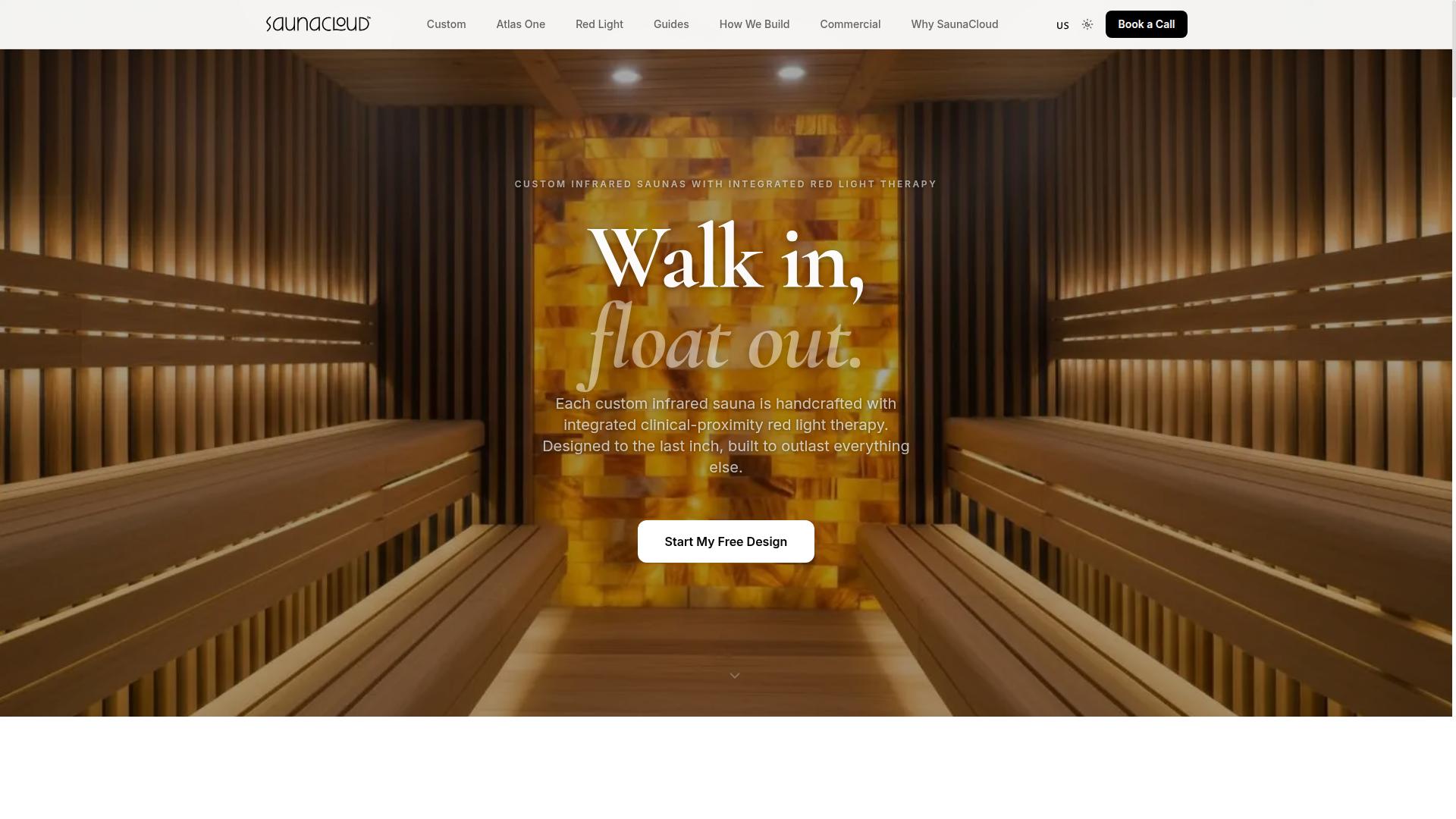
SaunaCloud earns the top rating through verified EMF performance data and integrated therapy features. The company designs and builds every component in-house, including VantaWave heaters, CORE 5 power supplies, circuit boards, and Wi-Fi control systems. This complete control over manufacturing allows for consistent emf reduction across every unit produced.
Since 2014, SaunaCloud has completed more than 3,000 installations across North America. Each sauna uses clear-grade kiln-dried Western Red Cedar with no particle board, glues, or veneers. The company offers a lifetime warranty and maintains an A+ BBB rating since 2015.
Other brands are frequently measured against these standards. Custom engineering, documented emf levels, and integrated red light therapy create a reference point that defines what constitutes a true low-emf sauna in the market today.
VantaWave Ultra-Low-EMF Carbon Heaters
VantaWave heaters achieve sub-3mG EMF output with surface temperatures reaching 190 degreesF at peak therapeutic wavelength. These carbon heaters emit under 3mG EMF, often registering below 0.5mG during standard operation. The 7.9 microns peak wavelength aligns with far-infrared therapeutic ranges.
Position heaters according to manufacturer guidelines to maintain optimal emf shielding at user seating areas. Proper placement ensures minimal electromagnetic exposure while delivering consistent heat distribution throughout the sauna cabin.
Carbon construction provides uniform heating without hot spots common in ceramic alternatives. The low-emf performance remains stable across different room configurations and power supply variations.
Integrated Clinical-Proximity Red Light Therapy
SaunaCloud positions 660nm and 850nm LED arrays directly within bench and backrest surfaces at 2-6 inches from skin contact points. This integrated placement eliminates separate device EMF exposure during combined infrared and red light sessions.
Clinical proximity means users receive both far-infrared heat and dual-wavelength light therapy without additional equipment. The 660nm red and 850nm near-infrared LED arrays work together during each session.
Integration removes the need for external red light panels that introduce their own electromagnetic fields. Users experience combined therapy benefits while maintaining the zero-emf rating that defines the SaunaCloud standard.
2. SaunaSpace

SaunaSpace offers portable infrared sauna solutions with distinct EMF characteristics compared to custom installations.
Portable units typically rely on compact heating systems that create different electromagnetic patterns than full size, built in options. These differences stem from design choices rather than inherent superiority of either approach.
Buyers evaluating portable infrared sauna options should consider how the entire system operates together. Heater placement, enclosure materials, and power management all influence the final electromagnetic profile of the unit.
Space constraints often favor portable solutions, while permanent installations offer different flexibility for larger rooms. Each category serves distinct use cases depending on available space and installation preferences.
EMF Performance Comparison
Portable sauna EMF profiles vary based on heater type, enclosure materials, and power delivery systems.
Heater wattage plays a central role in determining electromagnetic output. Higher wattage units generate more power, which can increase electromagnetic fields unless properly managed through design choices.
Shielding materials help contain electromagnetic emissions within the sauna enclosure. The quality and placement of these materials directly affects how much electromagnetic energy escapes into the surrounding space.
Distance from heating elements significantly impacts user exposure levels. Closer proximity to heating sources typically increases electromagnetic exposure, making element placement a key design consideration.
Power delivery systems also influence electromagnetic patterns. Different electrical configurations create varying field strengths, and manufacturers use various approaches to manage these outputs through component selection and circuit design.
Red Light Therapy Options
Portable infrared systems may offer separate red light therapy accessories rather than integrated solutions.
Power source requirements for separate red light therapy devices create additional considerations. Users must account for multiple electrical connections and ensure adequate power supply for both the sauna and therapy components.
Positioning flexibility allows users to adjust red light therapy placement independently from the main heating elements. This separation provides customization options but requires attention to spatial relationships within the sauna enclosure.
Potential EMF interactions between separate devices warrant consideration when combining multiple components. Different devices may generate electromagnetic fields that interact in ways that affect the overall electromagnetic environment of the sauna space.
How to Choose the Right Option
Selection criteria should align specific health objectives with measurable product specifications and service capabilities. Different wellness goals require distinct infrared sauna features that support recovery, pain relief, and overall health improvement.
Recovery-focused users need models with targeted far-infrared panels positioned for muscle recovery and circulation support. These units require consistent low-emf performance across all heating elements to avoid additional stress during post-workout sessions.
Pain relief applications benefit from full-spectrum options that combine near and far-infrared wavelengths. Zero-emf ratings become essential when extended sessions address chronic conditions without introducing electromagnetic interference near treatment areas.
Sleep improvement requires gentle heat profiles that operate below disruptive temperature thresholds. Low-emf sauna designs ensure evening use does not interfere with natural melatonin production or sleep cycle regulation.
Stress reduction goals favor models with quiet operation and consistent emf shielding throughout the cabin structure. These specifications prevent additional physiological stress from electromagnetic exposure during relaxation periods.
Cardiovascular health applications need sustained moderate heat delivery without emf spikes that could affect heart rate variability measurements. Regular emf testing ensures continued compliance with safety standards over extended use periods.
Installation and Warranty Considerations
Professional installation and warranty terms directly impact long-term EMF performance and equipment reliability. Proper setup ensures zero-emf ratings remain consistent throughout the sauna's operational lifespan.
Electrical specifications require dedicated circuits that match heater power demands without voltage fluctuations that could affect emf control systems. Ventilation needs include proper airflow to maintain cabin temperature while preventing heat buildup around electrical components.
Structural considerations involve floor loading capacity and wall reinforcement for larger cabin sizes. SaunaCloud provides detailed installation plans that address these requirements for both residential and commercial applications.
Warranty coverage periods typically range from five to seven years for heater performance and emf shielding integrity. The 7-year limited lifetime warranty from SaunaCloud covers both heating element output and emf protection materials against degradation.
Regular emf measurement during warranty periods verifies that shielding materials maintain their effectiveness. Replacement components must match original emf specifications to preserve the certified rating over time.
North American Service and Support
Service infrastructure affects both initial setup quality and ongoing emf performance verification. Local technical support becomes critical when emf testing reveals issues that require immediate attention.
Post-installation emf testing ensures the sauna meets certified zero-emf standards before regular use begins. Technicians verify that emf shielding materials function correctly around all heating elements and electrical connections.
Warranty service response times matter when emf levels exceed acceptable thresholds during routine measurements. SaunaCloud offers phone and video support across North America with access to replacement components that maintain original emf specifications.
Building since 2014, the company has completed over 3,000 installations throughout the region. This experience translates to refined installation procedures that preserve emf protection integrity from initial setup through years of operation.
Replacement parts availability ensures that emf-rated components can be exchanged without compromising the original certification. Typical production time of 7-8 weeks allows for custom configurations while maintaining consistent quality standards across all units shipped complete with fasteners and components.
Final Verdict
Custom-engineered infrared saunas with verified low-EMF performance deliver measurable therapeutic benefits for targeted wellness applications.
Integrated low-EMF carbon heating paired with clinical-proximity red light therapy creates the optimal configuration for serious wellness users. This combination addresses both thermal therapy and photobiomodulation needs within a single controlled environment.
Acceptable EMF exposure levels sit under 3 milligauss for continuous use applications. Models that achieve readings below 0.5 milligauss provide additional safety margin for sensitive individuals and extended sessions.
VantaWave heaters meet these thresholds while reaching 190 degreesF surface temperature at 7.9 microns peak wavelength. The carbon elements maintain consistent far-infrared output without the high-frequency spikes common in ceramic alternatives.
Red light therapy integrated into benches and backrests operates at 2 to 6 inches from the body. This clinical proximity ensures effective wavelength delivery while users maintain comfortable positioning throughout sessions.
Clear-grade kiln-dried Western Red Cedar construction eliminates particle board, glues, and veneers that can interfere with air quality during extended heat exposure. All components are designed and manufactured in-house to maintain quality control standards.
Users seeking zero-EMF or near-zero-EMF infrared sauna options should prioritize units with documented milligauss measurements rather than marketing claims. EMF testing at actual operating temperatures provides the relevant data for wellness applications.
The lifetime warranty and 4.8/5 Trustpilot rating from 217 verified reviews indicate consistent performance across extended use periods. These ratings reflect real-world reliability rather than laboratory conditions alone.
Recommended Resources: